
Political debates erupt over NDC's role in stripping OSP of its prosecutorial powers
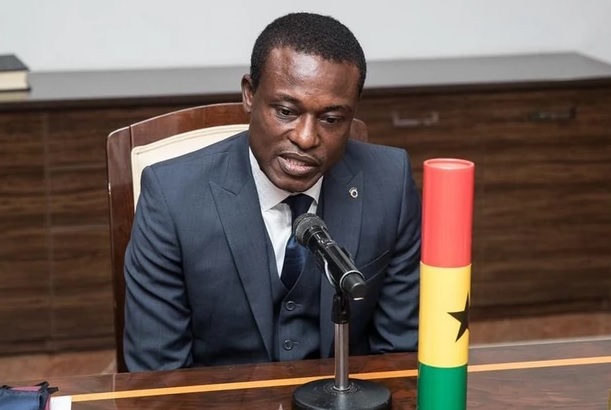
The anti-corruption framework has been thrown into uncertainty following a controversial High Court decision that effectively strips the Office of the Special Prosecutor (OSP) of its prosecutorial powers, igniting political debate over the role of the ruling National Democratic Congress (NDC) in the unfolding developments.
The ruling, delivered on April 15, 2026, by Justice John Nyante Nyadu, directed that all criminal prosecutions initiated by the OSP be declared null and void and immediately transferred to the Attorney-General’s Department.
The court further awarded GH₵15,000 in costs against the anti-corruption office, a decision that has halted multiple ongoing cases nationwide.
The judgment stemmed from a judicial review application filed by one of the four accused persons in a case involving allegations of conspiracy, forgery, and the unlawful seizure of imported containers using falsified documents.
The applicant challenged the legal authority of the OSP to independently prosecute cases without the express approval of the Attorney-General.
In his ruling, Justice Nyadu held that although the OSP is empowered to investigate corruption-related offences under the Office of the Special Prosecutor Act, 2017 (Act 959), it does not possess the authority to prosecute independently.
According to the court, such prosecutorial powers remain constitutionally vested in the Attorney-General, rendering all prosecutions undertaken by the OSP without such authorization invalid.
The decision has since triggered sharp political interpretations, with critics arguing that the development effectively sidelines the OSP at a time when the John Dramani Mahama-led administration is in power.
The ruling has been framed in some political quarters as a move that weakens an independent anti-corruption body, raising concerns about the future of accountability efforts.
The OSP, headed by Kissi Agyebeng, has strongly rejected the court’s position and announced immediate steps to challenge the decision.
In a statement issued shortly after the ruling, the office argued that the High Court exceeded its jurisdiction, insisting that only the Supreme Court of Ghana has the constitutional mandate to interpret or invalidate provisions of an Act of Parliament.
“The Office is taking steps to quickly overturn the decision,” the statement noted, maintaining that its prosecutorial mandate under Act 959 remains valid and enforceable until the Supreme Court determines otherwise.
The OSP also assured the public that all its ongoing and intended prosecutions remain lawful despite the ruling.
The latest development adds to a longstanding legal and constitutional debate over the independence of the OSP. Established in 2018 under former President Nana Addo Dankwa Akufo-Addo, the office was designed to operate as an independent body with the power to investigate and prosecute corruption-related offences, particularly involving high-ranking public officials.
Since assuming office in 2021, Kissi Agyebeng has overseen several high-profile cases, including investigations involving former government appointees such as Cecilia Abena Dapaah.
These cases placed the OSP at the center of the anti-corruption efforts, while also attracting political scrutiny and legal challenges.
However, conflicting court decisions over the scope of the OSP’s prosecutorial authority have deepened the uncertainty.
While another division of the High Court had earlier deferred a similar matter pending a Supreme Court interpretation, the latest ruling directly invalidates the OSP’s prosecutorial actions, creating a legal impasse.

