
Ofori-Atta must be an idiot to come to Ghana – Martin Amidu
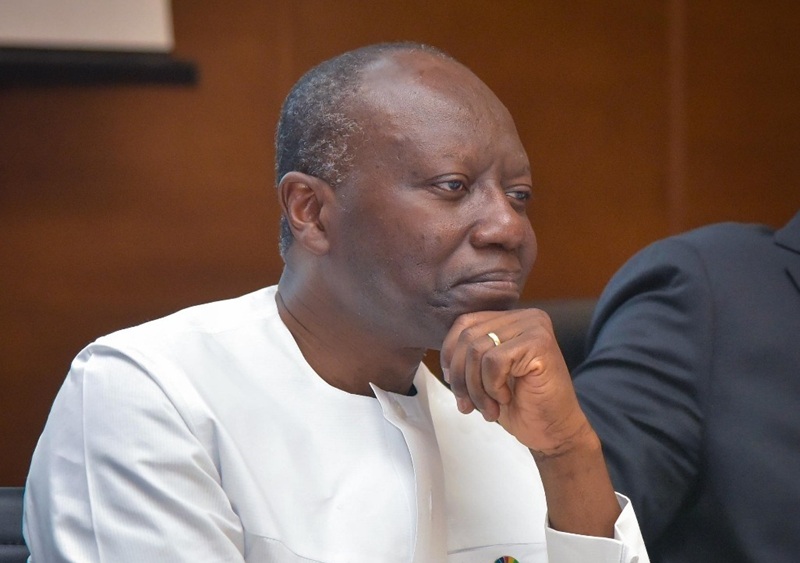
Former Special Prosecutor and Attorney-General Martin A.B.K. Amidu has launched one of his strongest criticisms yet of the John Mahama administration’s handling of the legal pursuit of former Finance Minister Ken Ofori-Atta, arguing that the former minister would be “an idiot” to voluntarily return to Ghana under the current circumstances.
In a lengthy article titled “Continued Political Witch-Hunt Against Ken Ofori-Atta in the Media is Nauseating,” published on June 25, 2026, Amidu accused the government and the Office of the Special Prosecutor (OSP) of prosecuting Ofori-Atta in the court of public opinion rather than allowing due process to take its course in the courts.
His intervention comes as the legal battle surrounding Ofori-Atta continues to dominate the political landscape.
The former Finance Minister, who served under former President Nana Addo Dankwa Akufo-Addo from 2017 until early 2024, remains at the centre of multiple criminal proceedings involving allegations linked to the Strategic Mobilisation Limited (SML) contract, National Cathedral payments, the ECG-BXC contract termination, ambulance procurement and the use of the Tax Refund Account.
Following his departure to the United States in January 2025 for medical treatment, the Office of the Special Prosecutor declared Ofori-Atta wanted after he failed to honour invitations for questioning.
The OSP subsequently initiated an INTERPOL Red Notice and later filed criminal charges before the High Court in Accra while Ghana also commenced extradition proceedings through the United States justice system.
The former minister has consistently denied wrongdoing. Through his lawyers, he has argued that the prosecution is politically motivated and has challenged both the INTERPOL notice and extradition efforts.
In recent months, he also secured adjustment of his immigration status in the United States after successfully pursuing permanent residency under U.S. immigration laws.
Martin Amidu argued that those developments demonstrated that Ofori-Atta is not a fugitive from justice but someone defending his constitutional rights through lawful international legal processes.
According to him, the successful challenge against the INTERPOL Red Notice and the outcome of the U.S. immigration proceedings undermine claims that the former Finance Minister deliberately fled justice.
“The continued political witch-hunt against Ken Ofori-Atta by the Office of the Special Prosecutor and the Government of Ghana through sections of the rented Ghanaian media is nauseating and shameful,” Martin Amidu wrote.
The former Attorney-General alleged that from the beginning of the Mahama administration, Ofori-Atta became the central target of what he described as a broader political strategy aimed at portraying the entire Akufo-Addo administration as corrupt ahead of the 2028 general elections.
According to Martin Amidu, successive governments since 2001 have used criminal investigations against officials of previous administrations as political tools rather than purely legal processes.
He argued that the New Patriotic Party (NPP), National Democratic Congress (NDC), and previous governments under Presidents John Agyekum Kufuor, John Evans Atta Mills, John Dramani Mahama and Nana Akufo-Addo had all engaged in similar practices.
Drawing on his own experience, Amidu recalled appearing before the National Reconciliation Commission in 2004 over allegations for which he was eventually cleared.
He said the experience convinced him that governments have often weaponised state institutions against political opponents.
He also referenced former NDC Minister Victor Selormey, who was convicted during the Kufuor administration before later receiving a presidential pardon because of deteriorating health, as well as former NPP Member of Parliament Adamu Dramani Sakande, who was similarly pardoned on health grounds.
According to Martin Amidu, those cases illustrate a recurring pattern in the political history in which criminal prosecutions frequently become entangled with partisan politics.
Martin Amidu further criticised the OSP’s handling of the Ofori-Atta investigations, arguing that authorities were fully aware the former Finance Minister was receiving treatment abroad for prostate cancer but nevertheless proceeded to declare him wanted and sought an INTERPOL Red Notice. He also referred to the widely publicised search conducted at Ofori-Atta’s residence by National Security operatives during his absence, describing the operation as degrading and unnecessary.
The former Special Prosecutor maintained that any lawyer acting in the best interests of Ofori-Atta would advise him against returning voluntarily to Ghana under the current circumstances.
“Ken Ofori-Atta must be an idiot if, after advice from his lawyers, both national and international, he voluntarily returned to Ghana to subject himself to investigation and possible prosecution after the government machinery was used… to mount a consistent trial in the court of public opinion,” Martin Amidu wrote, citing the experience of former Nigerian Petroleum Minister Diezani Alison-Madueke as an example of a politically sensitive prosecution fought outside her home country.
Martin Amidu also criticised reactions from some civil society organisations and political commentators who have demanded Ofori-Atta’s immediate return, arguing that they were ignoring the constitutional guarantees of fair trial, due process, liberty and human dignity available to every Ghanaian citizen.
He contended that no citizen is constitutionally obliged to surrender themselves where they reasonably believe state institutions have been weaponised against them and where their right to a fair trial may be compromised by sustained public condemnation before judicial determination.
Constitutional Dispute
The former Attorney-General also pointed to ongoing legal disputes surrounding the Office of the Special Prosecutor itself, including constitutional challenges questioning aspects of the OSP Act and the relationship between the Office and the Attorney-General’s constitutional powers.
He argued that those unresolved legal questions further complicated the government’s prosecution of Ofori-Atta.
While acknowledging the importance of fighting corruption, Amidu urged President John Dramani Mahama to use his final term in office to ensure that investigations and prosecutions are conducted strictly according to law rather than through political messaging.
He concluded that Ghana must treat crime as crime irrespective of political affiliation, warning that using criminal justice as a campaign tool ultimately weakens democratic institutions and undermines public confidence in the rule of law.
The Office of the Special Prosecutor has consistently rejected allegations of political persecution, maintaining that its investigations are based solely on evidence and that the criminal charges against Ofori-Atta will ultimately be determined by the courts.

