Catholic Bishops reject ‘watered-down’ Anti-LGBTQ Bill
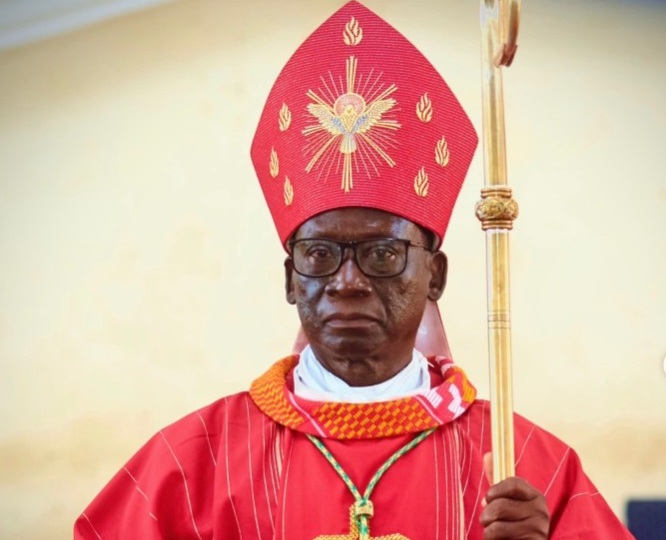
The President of the Ghana Catholic Bishops’ Conference (GCBC), Most Rev. Matthew Kwasi Gyamfi, has intensified pressure on Parliament to ensure that the Human Sexual Rights and Family Values Bill, 2025, popularly known as the Anti-LGBTQ Bill, is passed in a form that fully reflects the intentions of its original sponsors and the expectations of Ghanaians.
His intervention comes amid growing controversy over amendments introduced during the bill’s passage in Parliament, with concerns emerging from religious leaders, some Members of Parliament, and civil society groups about whether the revised legislation still retains the strength and objectives of the original proposal.
Speaking in recent media engagements, Most Rev. Gyamfi expressed strong dissatisfaction with suggestions that Parliament could pass what he described as a “disfigured” or “hollow” version of the bill.
According to him, Ghanaians expect lawmakers to deliver a law that faithfully reflects the principles and provisions that have been debated and supported by many religious and traditional institutions over the past several years.
“We want Parliament to put on the President’s desk what Ghanaians have asked them to do. Nothing more, nothing less,” the GCBC President stated, insisting that any legislative process that substantially alters the content of the bill would undermine the expectations of the public.
The latest debate follows Parliament’s passage of the Human Sexual Rights and Family Values Bill on May 29, 2026, after lawmakers approved a number of amendments during the consideration stage.
The amendments introduced exemptions for lawyers providing legal representation to LGBTQ persons, journalists and media organisations reporting on LGBTQ-related issues, and medical professionals offering healthcare, counselling and psychological services to such individuals.
While the Majority Caucus defended the changes as necessary safeguards to protect constitutional rights and professional responsibilities, some sponsors of the bill, the Minority has opposed the amendments.
They argued that the exemptions risk weakening the effectiveness of the legislation and creating loopholes that could undermine its enforcement.
The controversy deepened after Speaker of Parliament Alban Sumana Kingsford Bagbin raised concerns about the procedure used in passing the bill.
The Speaker subsequently appealed to Parliament to revisit the legislation, citing questions about whether all parliamentary procedures were properly followed and whether the bipartisan consensus reflected in the committee’s report was adequately demonstrated on the floor of the House.
Against this backdrop, the Catholic Bishops’ Conference has signaled that it is closely monitoring developments in Parliament.
Most Rev. Gyamfi noted that while Parliament has its own rules and procedures, lawmakers must ultimately ensure that the final outcome reflects the wishes of the Ghanaian people.
“How they do that is up to their own rules and regulations, but we want what Ghanaians want, and we are watching them very carefully,” he said.
The GCBC President acknowledged the ongoing disagreements among lawmakers regarding the process used to pass the bill but maintained that Parliament must resolve its internal differences and produce a clear and unified outcome.
“As at now, some are saying the right methods were used and others are saying the wrong methods were used. We do not know what the right methods in Parliament are and we do not know what the wrong methods are. They should sort themselves out and for once come together and give to Ghanaians what they have requested,” he stated.
His remarks reflect growing concerns among supporters of the bill that procedural disputes could once again delay the legislation, as happened in the previous Parliament.
The Human Sexual Rights and Family Values Bill has had a lengthy and contentious legislative journey.
First introduced in 2021 as a bipartisan private member’s bill, the legislation sought to strengthen the existing laws on same-sex relations while prohibiting LGBTQ advocacy, promotion and funding activities.
The bill received widespread support from religious bodies, including the Ghana Catholic Bishops’ Conference, the Christian Council of Ghana, Pentecostal and Charismatic organizations, Islamic groups and traditional authorities.
Supporters argued that the legislation was necessary to protect Ghanaian cultural, religious and family values.
However, the bill also attracted criticism from human rights organizations, legal experts and international groups who argued that some provisions could infringe on constitutional rights and freedoms.
Parliament initially passed the legislation in February 2024 during the Eighth Parliament. However, legal challenges filed at the Supreme Court and the subsequent dissolution of Parliament prevented the bill from receiving presidential assent, causing it to lapse.
Most Rev. Gyamfi warned against any repeat of the circumstances that prevented the previous bill from becoming law.
He stressed that Parliament must avoid procedural complications and technical disputes that could once again derail the legislative process.
“We do not want any technicalities, anything that will take us back to where we got to in the last Parliament, where the President, for reasons we do not yet know, did not append his signature,” he cautioned.
The Catholic Church leader further argued that any final legislation presented to the President must remain faithful to the original intent of the bill and should not be stripped of its substantive provisions through amendments.
“We want Parliament to put on the President’s desk what Ghanaians have asked them to do. They should not send a disfigured law that has been hollowed out of its content and hollowed out of what Ghanaians want,” he stressed.
According to him, a significantly altered bill would fail to satisfy public expectations and could ultimately undermine confidence in the legislative process.
“We are not going to accept that. Ghanaians will not accept that and they will not appreciate a law like that because it would be a bad law,” he added.
The latest intervention by the Ghana Catholic Bishops’ Conference adds to mounting pressure on Parliament as lawmakers prepare to revisit aspects of the legislation following concerns raised by Speaker Bagbin.

