3,200 Ghanaians face deportation from United States
The United States government has intensified its immigration enforcement efforts, with hundreds of Ghanaian nationals among thousands of foreign nationals facing deportation as part of what American authorities describe as a crackdown on individuals involved in serious criminal activities and immigration violations.
The latest action follows renewed measures by the U.S. Department of Homeland Security (DHS) and Immigration and Customs Enforcement (ICE), which Immigration and Customs Enforcement (ICE), which have identified a number of foreign nationals considered among the “worst of the worst” offenders.
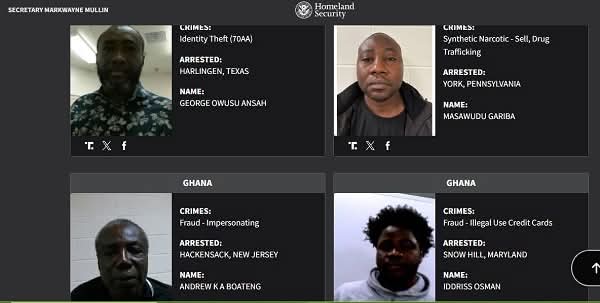
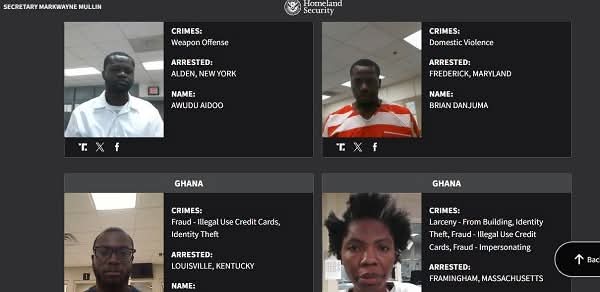
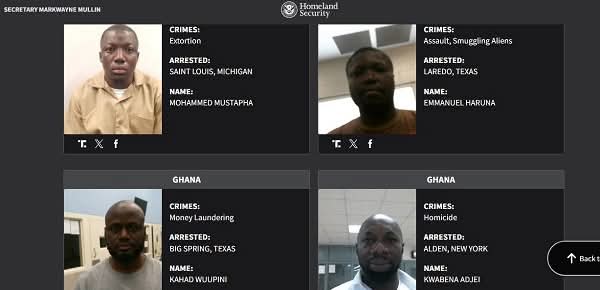
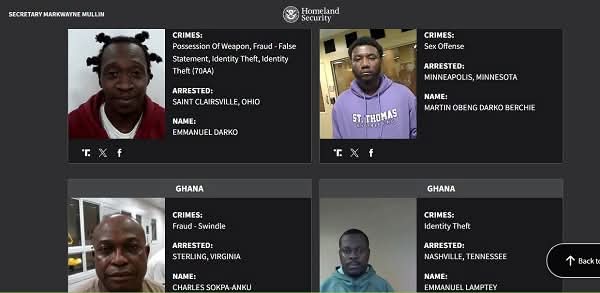
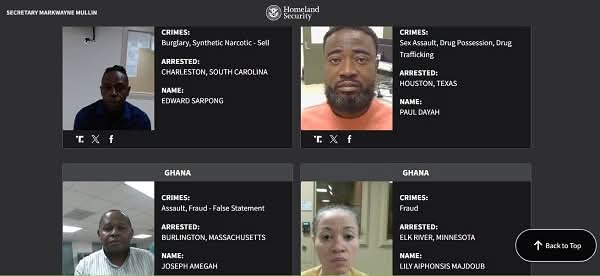
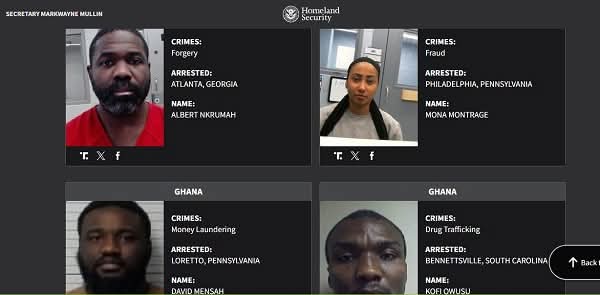
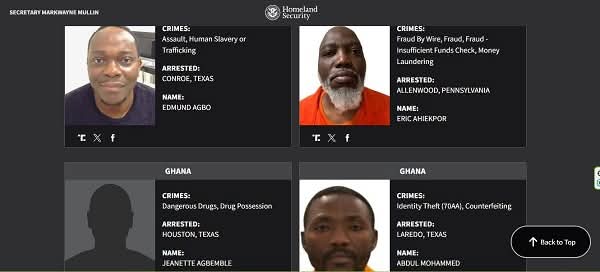
According to reports, some Ghanaian citizens have been included in enforcement operations targeting individuals convicted of violent crimes, sexual offences, drug trafficking, fraud, burglary, domestic violence, and other serious criminal acts.
The development comes amid a broader nationwide immigration enforcement campaign aimed at removing undocumented immigrants and foreign nationals who have breached U.S. immigration laws or committed criminal offences while residing in the country.
The U.S. authorities maintain that public safety remains a key priority of the operation, arguing that individuals with serious criminal records pose significant risks to communities.
Available figures indicate that more than 3,200 Ghanaian nationals have been listed among individuals facing removal proceedings from the United States, although not all have criminal records. Reports further suggest that some of those affected may be subject to expedited deportation processes because of prior convictions or immigration-related violations.
The intensified enforcement drive has reportedly resulted in large-scale arrests across several American cities, including Atlanta, Philadelphia, Newark, Washington D.C., New Orleans, and San Diego, where sizeable Ghanaian communities reside.
The deportation issue has become a matter of growing diplomatic and public concern between Ghana and the United States.
Earlier this year, the Ministry of Foreign Affairs confirmed that it had received official communication regarding a number of Ghanaian citizens earmarked for repatriation.
The Ministry subsequently initiated engagements with U.S. authorities to ensure that any deportation exercise is conducted in accordance with international standards and with due respect for the rights and dignity of affected individuals.
Government officials have indicated that Ghanaian diplomatic missions in Washington and New York have been working to verify the identities and travel documentation of affected nationals to facilitate an orderly repatriation process.
The Ghana Immigration Service and other state institutions are also expected to play roles in receiving and processing deportees upon arrival in Ghana.