
Cabinet finalises gov't position on constitutional review; A-G to unveil major reform proposals
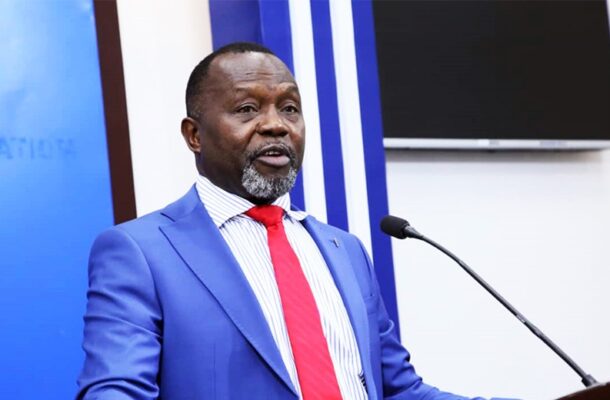
The John Mahama government has concluded Cabinet deliberations on its long-awaited position paper responding to the recommendations of the Constitution Review Committee, paving the way for the Attorney-General and Minister for Justice to publicly unveil the government’s official reform proposals next week.
The conclusion of the Cabinet session marks a major milestone in President John Dramani Mahama’s constitutional reform agenda, bringing government a step closer to implementing possible amendments to the 1992 Constitution after months of consultations and policy discussions.
Government sources confirmed that following Cabinet’s approval, the Attorney-General and Minister for Justice will publish the government’s position paper and brief the nation next week on the outcome of the deliberations, including the specific recommendations government intends to adopt.
The development follows a brief delay in the final Cabinet meeting after an earlier session scheduled for Friday, July 10, 2026, was postponed to allow ministers to participate in the nationwide National Clean-Up Exercise ordered by President Mahama in response to the devastating June 29 floods that affected several parts of Accra and other communities.
Before the postponement, Cabinet had already held two extensive meetings to scrutinise the recommendations contained in the Constitution Review Committee’s report. Government officials indicated that only a handful of amendment proposals remained outstanding before the document was finally adopted.
With Cabinet’s work now completed, the Attorney-General’s Department and government legal advisers are expected to consolidate the approved amendments into a comprehensive government position paper.
That document, together with the Constitution Review Committee’s report, will subsequently be transmitted to the Constitution Review Implementation Committee to begin the next phase of the constitutional reform process.
The constitutional review exercise fulfils one of President Mahama’s key governance commitments after returning to office. Since assuming power, the administration has argued that although the1992 Constitution has successfully sustained the country’s Fourth Republic for more than three decades, several aspects of the governance framework require reforms to improve accountability, deepen democratic institutions and address emerging constitutional challenges.
Speaking ahead of Cabinet’s final deliberations yesterday, President Mahama stressed that the objective of the review is not to replace or weaken the Constitution but rather to modernise and strengthen it for future generations.
According to the President, the 1992 Constitution remains one of Ghana’s most successful constitutional documents, having provided the foundation for the country’s longest uninterrupted democratic era.
“The 1992 Constitution has served us well. It has been one of our best constitutions and that is what has been the underpinning of the Fourth Republic, and the Fourth Republic has lasted longer than any other republic in our history,” President Mahama stated.
He added that government believes carefully considered amendments would make the Constitution more responsive to present-day governance challenges while preserving its democratic foundations.
“We believe that any tweaking of the Constitution will only go to strengthen it even more and make it a living document to take us for the next 30 years,” the President said.
The constitutional review process has generated significant national interest, with political parties, civil society organisations, legal practitioners, traditional authorities and governance experts submitting proposals on issues ranging from the election of Metropolitan, Municipal and District Chief Executives (MMDCEs), reforms to the Office of the Special Prosecutor, the appointment of ministers from Parliament, strengthening independent constitutional bodies, decentralisation, judicial reforms and measures to enhance transparency and accountability.
The Attorney-General’s forthcoming public briefing is therefore expected to provide the first detailed insight into which recommendations Cabinet has accepted, modified or rejected, and outline the roadmap towards implementing the proposed constitutional reforms, including any amendments that may eventually require parliamentary approval or a national referendum under the provisions of the 1992 Constitution.

